Beneath the Earth: Inner Space Cavern and the Power of Time
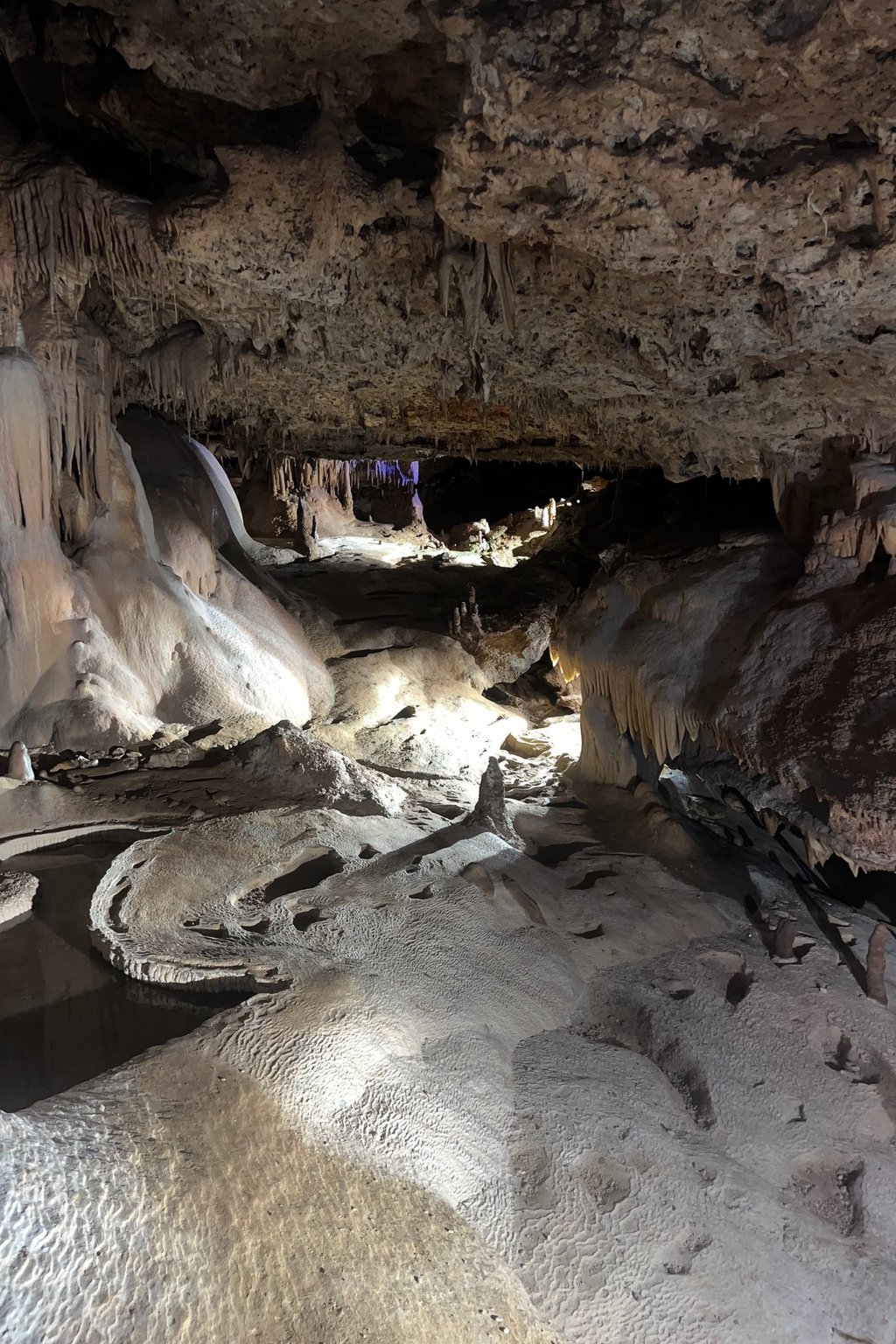
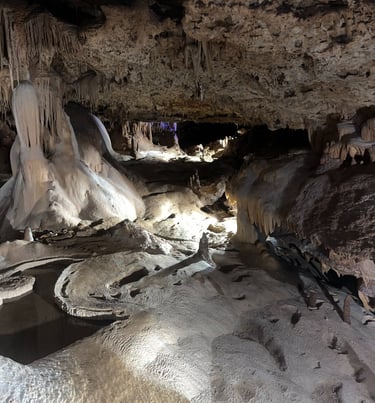
Inner Space Cavern in Georgetown, Texas is more than a geological wonder—it is a reminder of how time, pressure, and patience work together to create something enduring. The limestone that holds the cavern was formed over 100 million years ago during the Cretaceous Period, when this region was covered by a shallow sea. Long before humans, before memory, before language, the foundation was quietly being laid. Nothing rushed. Everything took its time. Millions of years later, during the Pleistocene Epoch, water slowly carved passages through the stone. Openings formed. Life entered. Some creatures never left. Their remains were preserved, leaving behind evidence of a world shaped by change, survival, and adaptation. What appears as loss on the surface became history beneath it. We now live in the Holocene Epoch, the current chapter of Earth’s story. In 1963, while drilling for a highway, humans rediscovered what had existed all along. The cavern wasn’t created in that moment—it was recognized. By 1966, it was opened to the public, inviting people to walk through chambers shaped by time rather than haste. Inner Space Cavern mirrors the human experience. We are formed long before we are understood. We are shaped by unseen pressures. And often, we are discovered—by ourselves or others—much later than our origin. What lies beneath the surface is not forgotten. It waits.
Ariana Bibb
1/18/2026